Turn every cloud incident into an explainable investigation.
ObsMate brings signals, metrics, workload topology, specialized AI agents, and recorded evidence into one incident workflow—so teams reach a defensible answer faster.
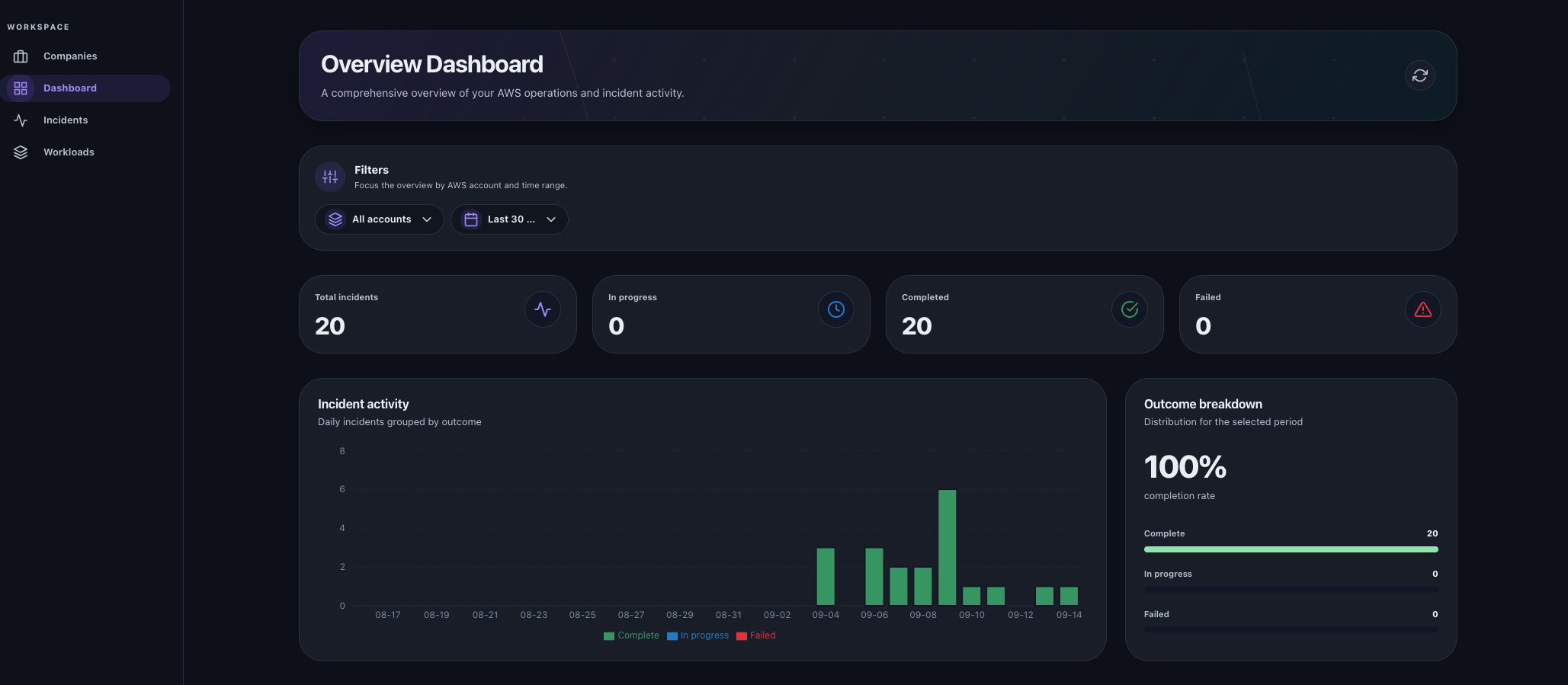
See investigation volume, status, outcome, and recent activity across connected AWS accounts—without losing the incident history behind the totals.
ObsMate operations overview
Operations dashboard
A shared command view for cloud operations, platform engineering, and incident leadership.
Four connected capabilities
From noisy signal to evidence-backed action.
ObsMate keeps the incident, workload, evidence, and investigation trail connected so every answer can be reviewed in context.
01
Incident intelligence
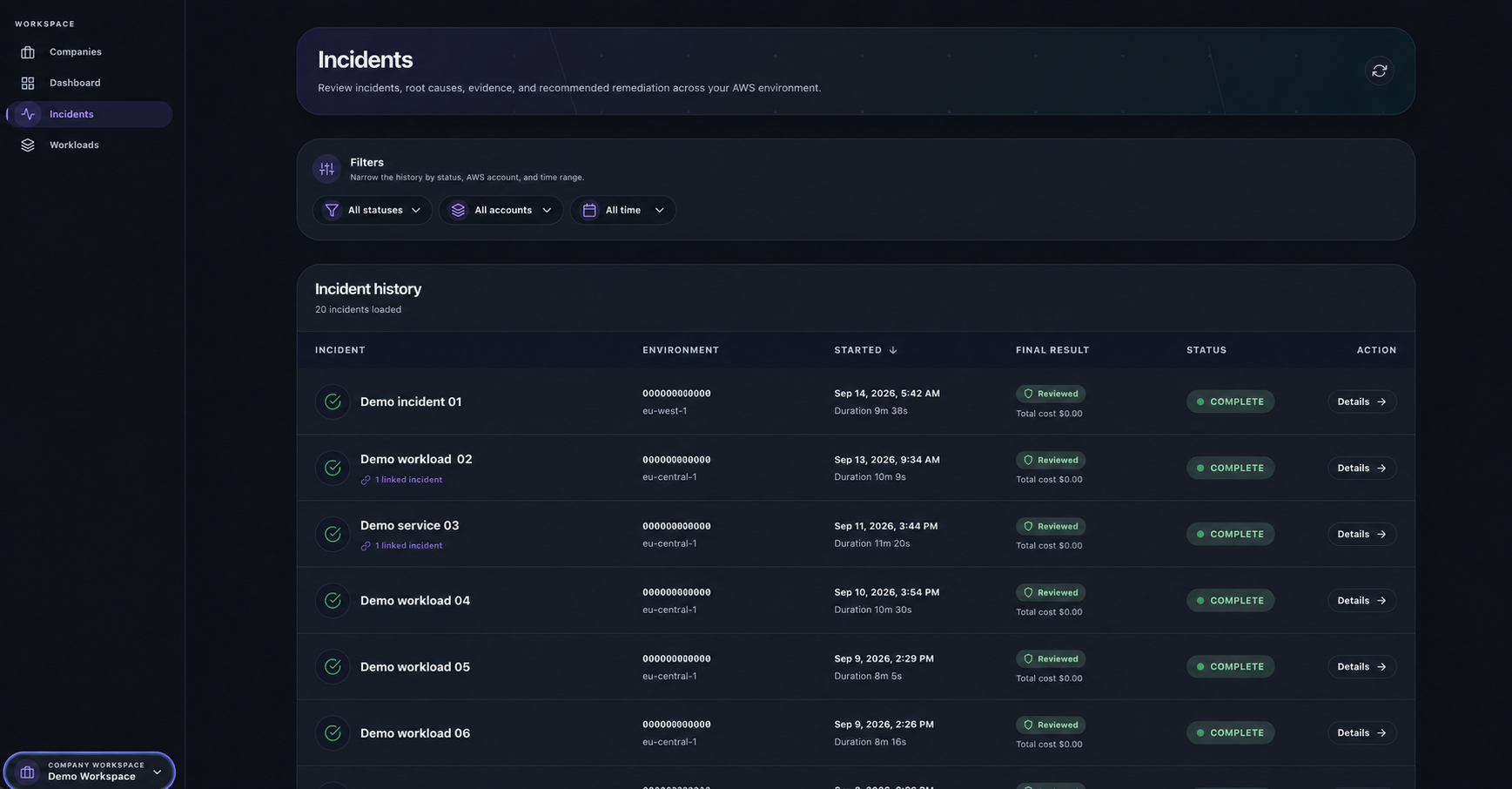
Correlate incidents, not isolated alerts
Turn a stream of operational signals into a structured incident history with status, scope, evidence state, and investigation outcome in one view.
Cross-signal incident context
Clear investigation and outcome status
Searchable operational history
Correlate incidents, not isolated alerts
02
Evidence-backed analysis
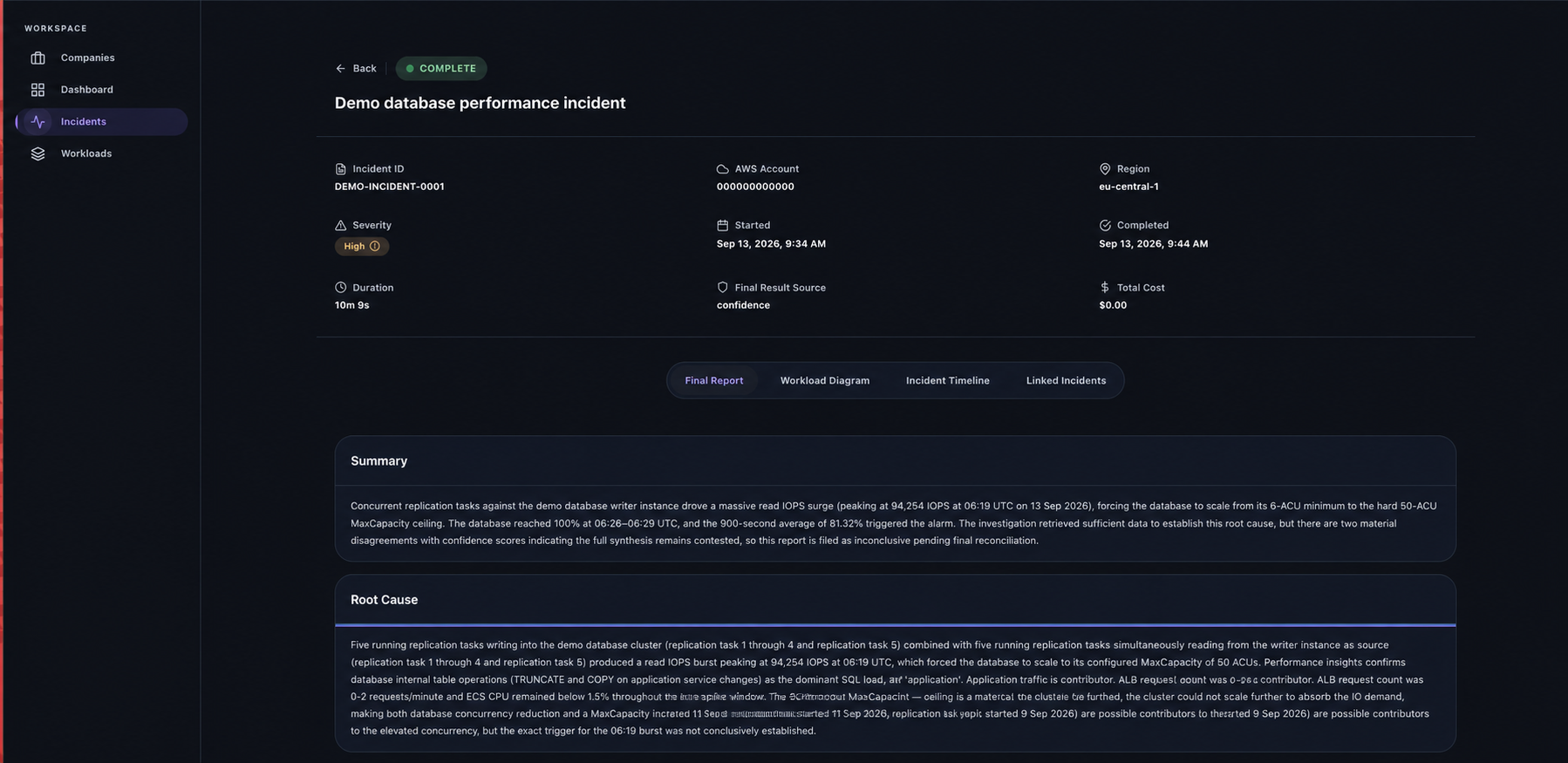
Move from symptoms to a defensible root cause
ObsMate assembles the signals, cloud context, and agent findings behind an incident so responders can review the reasoning—not just receive another opaque summary.
Concise incident and root-cause reports
Evidence and confidence captured together
Recommended remediation with technical context
Move from symptoms to a defensible root cause
03
Workload context
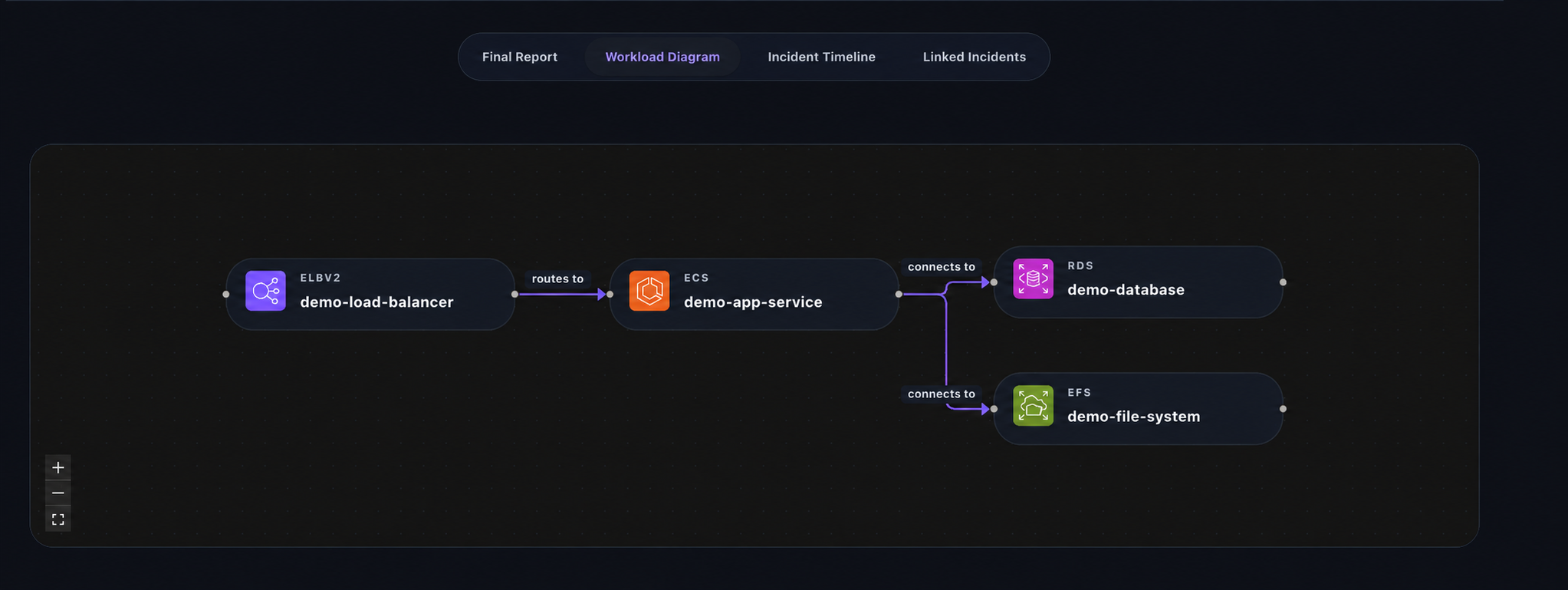
See the workload around the failure
Map the services and dependencies involved in an incident so investigators can understand where the signal originated and what it may affect.
Workload-level topology views
Cloud dependency context
Incident analysis grounded in architecture
See the workload around the failure
04
Explainable investigation
Trace the investigation from signal to evidence
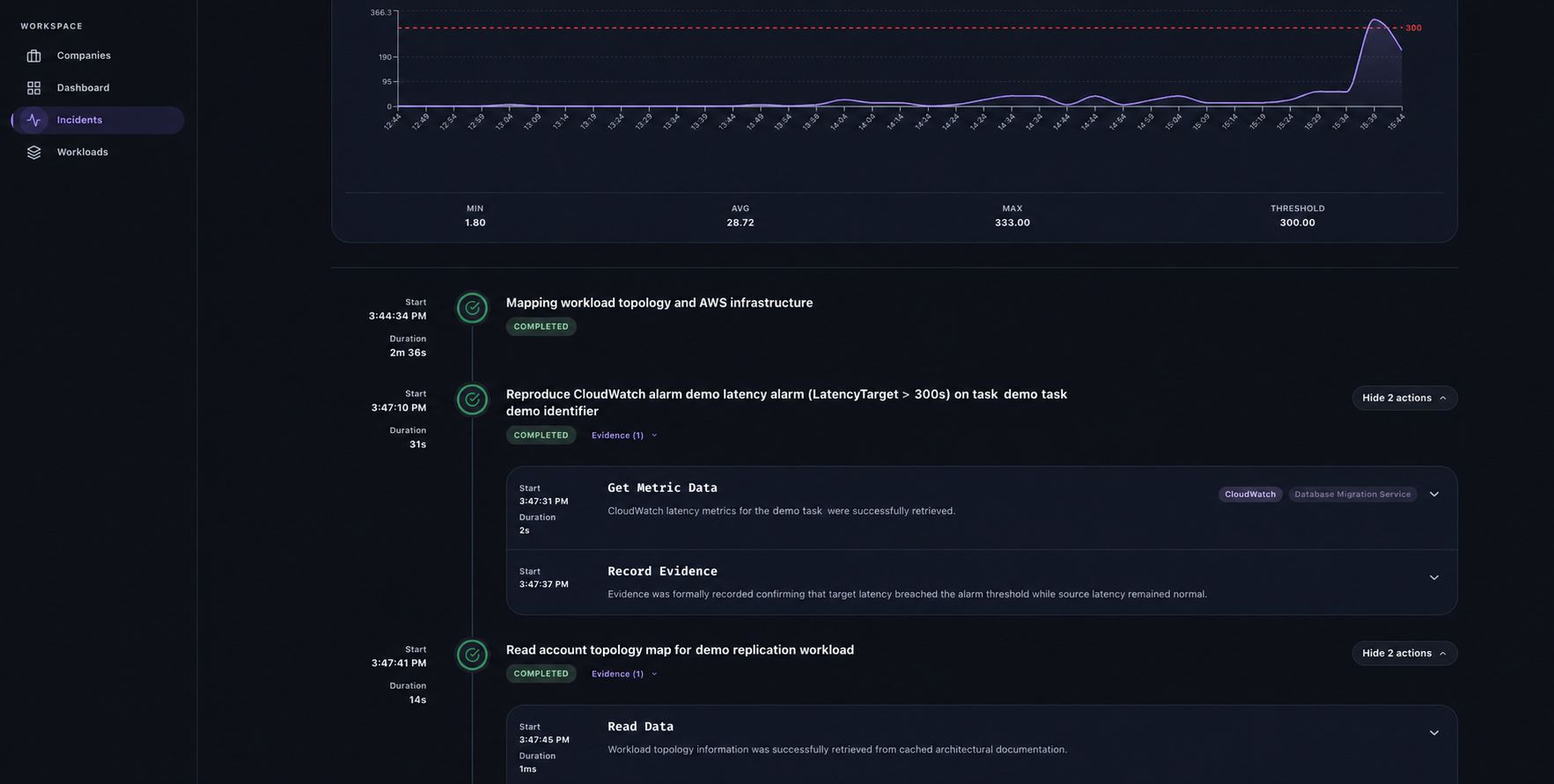
Follow each investigation step—from topology mapping and metric retrieval to alarm reproduction and recorded evidence—with a transparent operational timeline.
Visible agent actions and elapsed time
Metrics and evidence attached to each step
A reviewable path to the final conclusion
Trace the investigation from signal to evidence
How ObsMate works
Detect. Contextualize. Investigate. Explain.
The platform coordinates specialized investigation steps while preserving the evidence and reasoning needed for an engineer to review the result.
01
Receive the signal
Start from an operational alarm or event and establish its scope, status, and immediate context.
02
Map the workload
Bring the affected resources, dependencies, metrics, and surrounding cloud environment into view.
03
Investigate in parallel
Specialized agents retrieve evidence, test hypotheses, and share findings through a coordinated workflow.
04
Deliver a reviewable answer
Present root cause, confidence, evidence, and recommended next steps in a persistent incident record.
A practical comparison
ObsMate compared with conventional incident triage.
ObsMate complements the monitoring stack by connecting the work that usually happens after an alert fires.
Area
With ObsMate
Conventional approach
Starting point
An incident enriched with cloud and workload context
An alert and a link to a dashboard
Investigation
Specialized agent steps coordinated around one incident
Engineers move manually across consoles, queries, and tools
Architecture context
Relevant resources and dependencies kept with the investigation
Topology reconstructed from tribal knowledge or separate systems
Evidence
Metrics, actions, and findings recorded in a reviewable timeline
Evidence scattered across tabs, notes, and chat threads
Outcome
Root cause, confidence, and next steps in one incident record
A hand-written summary after the incident is resolved
Frequently asked questions
Evaluate ObsMate against your incident workflow.
Start with the alerts, evidence sources, account structure, and approval boundaries your operations team already uses.
ObsMate is an AI-powered cloud operations platform that investigates incidents by combining operational signals with AWS resource, metric, and workload context. It produces a reviewable incident record with evidence, reasoning, and recommended next steps.
Does ObsMate replace our monitoring and observability tools?
No. Monitoring and observability tools remain the system of record for telemetry and alerts. ObsMate adds an investigation and correlation layer that uses those signals together with infrastructure context to reduce the manual work between an alarm and an informed response.
How is ObsMate different from a general-purpose AI assistant?
A general assistant can summarize text supplied to it. ObsMate is designed around cloud incidents: it gathers scoped operational evidence, maps relevant workload context, records its investigation steps, and organizes the result for technical review.
Does ObsMate make infrastructure changes automatically?
ObsMate focuses on investigation, evidence, root cause, and remediation guidance. Any automated action should follow the access controls, approval policies, and operating model agreed for your environment. CloudVests can help define that boundary during evaluation.
How is access to our AWS environment handled?
Access is scoped to the accounts, regions, and evidence required for the agreed use case. Permissions, retention, operational boundaries, and deployment requirements should be reviewed with your security team before production onboarding.
See your operations differently
Investigate the next incident with shared context.
Explore how ObsMate can connect your AWS signals, workload topology, agent analysis, and operational evidence.